Inside the Lab Asking Whether Sensory Input Affects the Nervous System
From hot tubs to rollercoasters to music, one research team is cautiously exploring the radical possibility that experience influences internal state.
For decades, researchers have wrestled with one of the most difficult questions in modern science: can what a person experiences affect how they feel?
At the Center for Applied Regulatory Inquiry, a small but determined team has spent the last 18 years trying to answer that question. Their work has taken them into hot tubs, concert halls, and amusement parks, all in pursuit of a hypothesis many once considered too ambitious to test.
The results so far have been promising.
“We’re still in the early stages,” said Dr. Elaine Wirth, director of the lab. “But we do think there may be a relationship between inputs and internal state.”
The claim is controversial. For generations, many experts have quietly operated as though stress and anxiety arise in a vacuum, largely unaffected by warmth, sound, motion, pressure, rhythm, beauty, social contact, or the fact that things are happening. Wirth’s team is among a growing number of scientists beginning to challenge that model.
“We’re not saying sensory input matters in every case,” Wirth cautioned. “We’re just saying human beings may, under certain conditions, respond to what happens to them.”
The lab’s earliest breakthrough came in what is now known as the Warm Water Study. Participants were randomly assigned to one of two groups: Hot Tub and Not Hot Tub. Those in the Hot Tub group were placed in warm, bubbling water up to the shoulders. Those in the Not Hot Tub group were not.
The findings were striking. Compared to controls, participants in the Hot Tub condition reported reduced tension, improved comfort, and a statistically significant increase in wanting to continue being there. Several participants declined to exit the apparatus.
“At first we thought there had to be a methodological error,” said one co-author. “The effect was just so robust.”
Follow-up work confirmed the finding across multiple temperatures and jet intensities. In one especially ambitious paper, researchers tested whether the effect depended on the water being warm. Preliminary evidence suggested that, remarkably, it did. Early results from a pilot study, however, suggest that cold water may also be doing something.
The team later expanded into music research. Here again, the question was deceptively simple: if a person hears sounds they enjoy, does that alter their internal experience?
To investigate, the lab exposed one group to music they described as pleasurable, meaningful, or emotionally regulating. A control group was exposed to what researchers termed “non-preferred acoustic content,” a category broad enough to include leaf blowers, a nearby man eating chips during a webinar, and a podcast in which two men discuss cryptocurrency with missionary intensity.
Once again, the data pointed in a consistent direction. Participants listening to preferred music reported improved mood, reduced stress, and in some cases the spontaneous generation of memories, imagery, and facial expressions associated with being a person.
Not all scholars are convinced. Some argue that music is too broad a category to study meaningfully and that future work should distinguish between rhythm, melody, nostalgia, and songs that make a person stare out a window as if they had just returned from war. Others caution that context matters: the same song that regulates one person may cause another to text an ex and call it “closure.”
The team’s most surprising findings emerged from its rollercoaster research. Unlike hot tubs or music, rollercoasters are not generally marketed as calming. But Wirth’s lab suspected that the relationship between sensory input and regulation might be more complicated than simple soothing.
They were right.
Participants exposed to rapid motion, height, noise, acceleration, acute anticipatory arousal, and intense vestibular stimulation reported a wide range of outcomes. Some felt exhilarated. Some felt terrified. Some described themselves as “weirdly reset.” Several reported that after screaming at full volume while being hurled through space, their previous stressors seemed less compelling.
This, according to Wirth, represented a major theoretical advance.
“For years, people assumed the question was whether a given input lowers stress,” she said. “But our findings suggest a more sophisticated model. Inputs do not have to be gentle to be regulatory. They may alter state through intensity, absorption, novelty, contrast, rhythm, meaning, or direct vestibular disruption of whatever nonsense the person was thinking about five seconds earlier. In some cases, the nervous system appears to benefit not from being soothed, but from being fully occupied. In rare cases, it may benefit simply from having a new problem.”
Not every input altered state in a direction participants preferred. A pilot trial on fluorescent lighting in a windowless conference room reliably produced despair. A workplace simulation involving a 46-minute networking breakfast generated stress across all conditions. Another project examining the effects of hearing the phrase “circle back” 14 times in a single meeting was halted on ethical grounds after researchers confirmed that this, too, appears to impact people.
Still, the broader pattern has become difficult to ignore. Across domains, participants appear to be influenced by warmth, sound, motion, pressure, social contact, proprioceptive input, vestibular experience, environment, smell, and taste. This has led some theorists toward a radical synthesis: rather than asking whether each isolated activity independently “helps with stress,” researchers may need to confront the larger possibility that nervous systems are continuously shaped by ongoing conditions inside and around them.
Although the field has traditionally divided these phenomena into separate categories—music, nature, hydrotherapy, relaxation techniques, smell, taste, and proprioceptive or vestibular activity—some believe this may obscure the deeper principle. The question, they argue, is not whether each individual activity must be proven to “reduce anxiety.” The question is how a nervous system could possibly fail to be shaped by experience.
“These findings are forcing us to rethink a lot,” said one industry consultant. “For example, it may no longer be enough to ask whether hot tubs reduce stress, whether music reduces stress, whether nature reduces stress, whether laughter reduces stress, whether a familiar smell reduces stress, or whether lying under a blanket while rain hits the windows reduces stress. We may eventually have to ask whether the nervous system is responsive to inputs as such.”
Even within the lab, some researchers have struggled to absorb the implications.
“It’s all about balance,” said senior fellow Dr. Marcus Vell, “but not in the way balance is usually about balance.”
When asked to clarify, Vell said only that the lab is committed to nuance. He declined to elaborate.
Wirth now emphasizes that not all sensory input is universally calming, and not every person responds the same way to every stimulus. But she argues that this variation does not weaken the lab’s central insight.
“The nervous system is not indifferent,” she said. “That doesn’t mean every input is helpful. It means inputs matter.
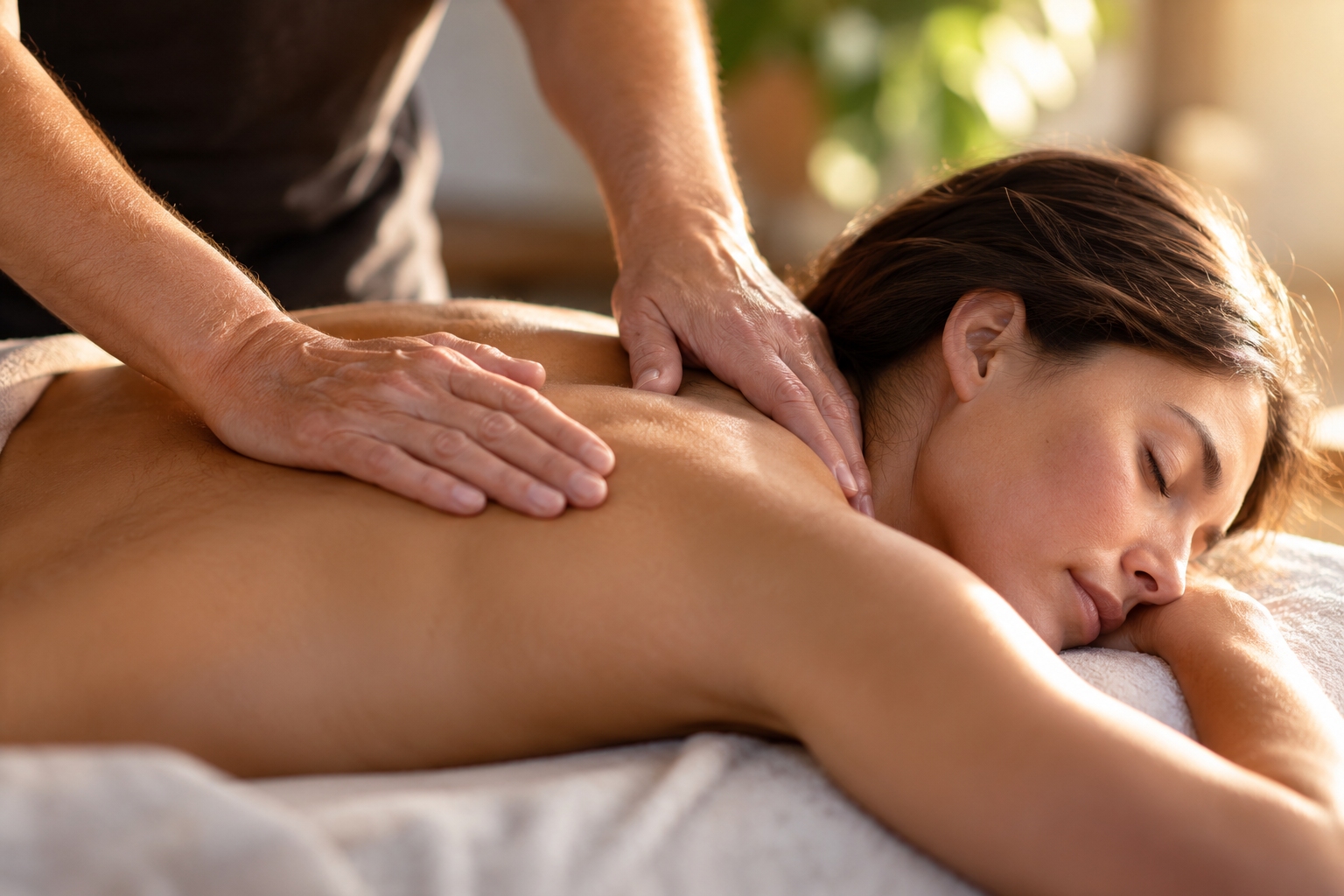
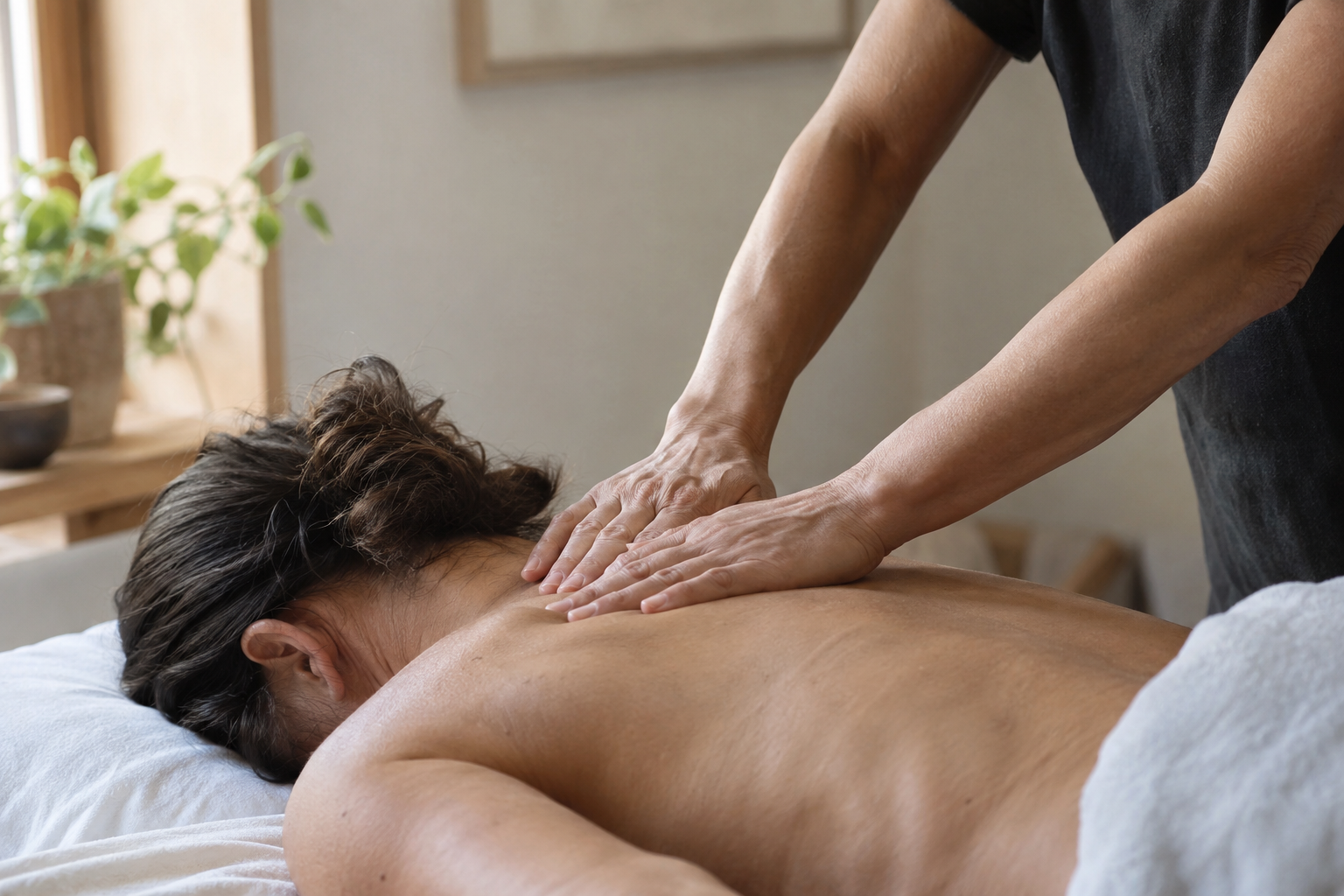
The lab’s next phase will examine whether skin contact has any effect.
Discover how the intricate relationship between the brain, pain, and body shapes our experience of posture. This on-demand course unpacks neuroscientific insights and connects it to practical bodywork techniques, empowering professionals and individuals to approach pain and posture with confidence and clarity.
Author
Dr. Mark Olson holds an M.A. in Education and a Ph.D. in Neuroscience from the University of Illinois, specializing in Cognitive and Behavioral Neuropsychology and Neuroanatomy. His research focused on memory, attention, eye movements, and aesthetic preferences. Dr. Olson is also a NARM® practitioner, aquatic therapist, and published author on chronic pain and trauma-informed care. He offers a variety of courses at Dr-Olson.com that provide neuroscientific insights into the human experience and relational skill training for professionals and curious laypersons.