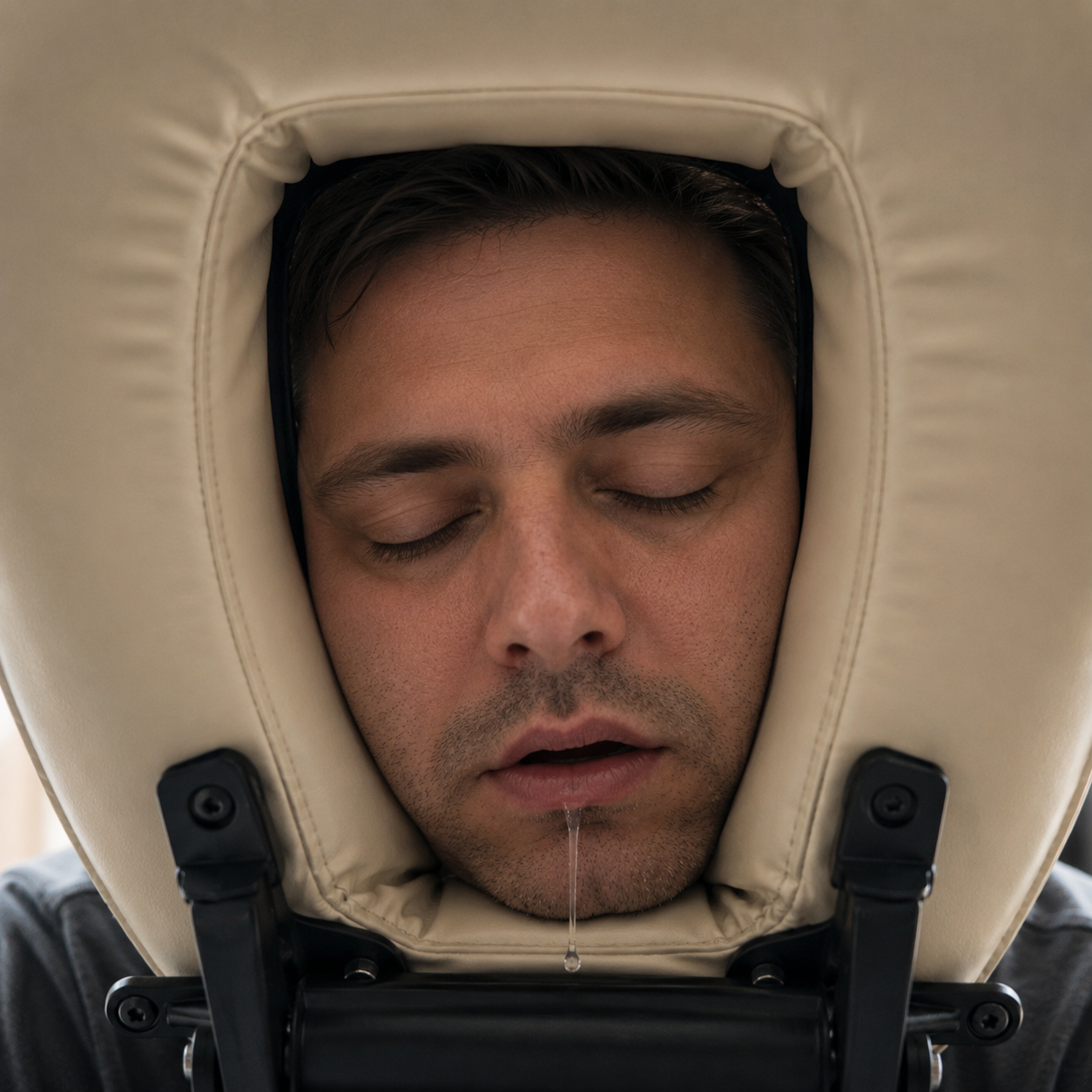
What Kind of Thing is a Massage?
What kind of experience are you purchasing when you buy a massage?
It’s an odd question, mostly because we never ask it. But look at the other things we choose to do. We listen to music largely for the sound of it. We go to a good restaurant for taste and smell. We do a crossword for the specific pleasure of working a problem out. We play cards partly for the challenge and partly for the company. We go to parties to be around people. We have sex for reasons that are usually sensory and emotional and relational all at once, without much need to sort out which is which.
Almost nothing we enjoy fits in one box. A concert is an auditory experience, sure, but standing in a room with a few hundred people reacting to the same music at the same moment is part of it, too. Eating dinner with friends isn’t the same activity as eating the same food alone. A card game is thinking, competing, and spending time with someone, braided together.
Even “sensory experience” undersells things. Take walking into the ocean on a warm day. There’s no single sensation that adds up to the experience — the shock of cold water against warm air, waves pushing at your legs, sand shifting under your feet, salt on your lips, sun on your face, the roar of surf, wind on wet skin, the small effort of staying upright as the current pulls at you. Underneath all of that there might be anticipation, a memory of some other beach, a feeling of being unusually free, the fact that other people are nearby (or not).
Nobody feels the need to name which of these is the “active ingredient.” The experience is all of it at once, and its value has nothing to do with the ocean correcting something in us. Getting in the water can just be a wonderful thing to do.
Other things we do for entirely different reasons: fix a leaking pipe because it’s broken and we want it working again, take the car to a mechanic because something’s wrong with it, and see a doctor because something about our health needs looking into. In these cases the experience itself barely matters. Nobody pays a plumber for the pleasure of watching a pipe get fixed. Nobody sits through a root canal for what it feels like in the moment. What matters is the state we’re in afterward.
Massage sits somewhere between these two worlds of doing it for the experience and doing it for the impact afterwards.
What kind of experience is it, and why do we do it?
These are actually two separate questions, and pulling them apart helps clarify things.
The first: what kind of experience is this? Experience has dimensions. Some are sensory — touch, sound, taste, smell, temperature, movement. Some are cognitive — thinking, learning, puzzling something out. Some are relational — interacting with, caring for, or simply being near another person. Others are emotional, or about mastery and achievement, or aesthetic, or bound up with meaning and ritual. None of these categories are exclusive; most activities worth doing combine several of them in different amounts.
The second question is different: why are we doing it? Here the useful distinction is between experiential and instrumental value. Some things matter because of what happens while we’re doing them — the experience is the whole point. Your hearing doesn’t need to improve for a piece of music to have been worth listening to. A great meal doesn’t need to leave your tongue working better than it did before dinner. A conversation with a friend doesn’t need to fix anything in your body to justify the hour.
Other things are instrumental. We do them for a result that comes afterward. A medical procedure can be unpleasant and still worth having, because we expect it to treat something. Fixing a broken appliance isn’t fun, but afterward the appliance works.
This line isn’t a hard one. We can enjoy the act of fixing something. Exercise can feel good in the moment and still be done for its long-term effects. A meal delivers both pleasure and nutrition. Sex can be sensory, relational, emotional, and reproductive at once — or any mix of those, depending on the occasion.
So where does massage fall?
Massage as a sensory experience
The obvious answer: massage is deeply sensory. That sounds almost too obvious to say, and yet it’s striking how rarely anyone actually describes massage this way.
Touch is to massage what sound is to music, or taste and smell are to a good meal — the medium the whole thing runs on. A massage delivers a constantly shifting stream of information: pressure, movement, stretch, warmth, contact, speed, rhythm.
But even “touch” understates it. Like the ocean, massage is a whole-body, multi-sense event. It changes how you sense your own body in space. It redirects attention — a shoulder that’s spent all day at the edge of your awareness can suddenly feel vivid and present. Pressure applied in one spot can produce sensation somewhere else entirely. A broad palm feels nothing like a single finger. Stillness after movement doesn’t feel like stillness on its own. The exact same pressure can read as pleasant, uncomfortable, intense, or barely there, depending entirely on what came before it.
Massage doesn’t just happen to tissue. It happens in perception.
And unlike the ocean, there’s someone on the other end of it.
Touch is relational by nature
The relational side of massage isn’t decoration layered on top of a tactile experience — it’s built into what touch is.
Music through headphones doesn’t need anyone responding to you in real time. The ocean doesn’t notice how you reacted to the last wave. Touch between two people works differently. There’s a loop running the whole time: one person presses, the other responds — breath changes, muscles soften or pull away, and the first person feels that shift and adjusts what comes next. Even in total silence, two people are building the experience together.
Touch has a strange property that most other senses lack: the stimulus itself is another person’s behavior toward you. A chef makes food I taste. A musician makes sound I hear. The ocean makes a pile of sensations I happen to be standing in. But when someone puts a hand on my body, what I’m feeling is literally their action, aimed at me. The sensation and the relational act are the same event.
We already know this from ordinary life. A hand on the shoulder can be reassurance. Holding hands can say more than words would. A hug communicates something neither person has to explain. And touch that isn’t wanted can feel invasive even when nothing about it is physically painful — because we don’t experience touch as pressure and temperature alone. We also register who is touching us, why, and what it seems to mean.
The biology is consistent with this special role for touch. Human hairy skin contains C-tactile afferents — slow-conducting sensory fibers that respond particularly well to gentle, slow stroking of the kind common in affiliative touch. Their activity has been associated with affective and pleasant aspects of touch, rather than primarily with identifying where contact occurred or describing its mechanical properties.
That doesn’t mean these fibers are broadcasting “this person cares about you” directly to the brain. Context still does much of the work: the same physical contact can land as comforting, awkward, or threatening depending on who’s doing it, whether it’s wanted, and what you think is happening. But that’s really the point — in human touch, sensation and relational meaning aren’t separable. What a touch means changes what it feels like.
This is why comparing a massage to a massage chair only gets you so far. A machine can generate pressure and vibration and heat. What it can’t reproduce is another person intentionally touching you and adjusting to how you respond. A massage isn’t a tactile experience that happens to take place near another human being — the other person’s behavior is the tactile experience.
None of this requires conversation or any explicit sense of “connection.” Plenty of clients prefer silence and minimal interaction. Silence doesn’t cancel the relational nature of the touch. For an hour, one person is paying attention to another, acting on them physically, reading their responses, and adjusting.
Massage isn’t sensation delivered to a person. It’s sensation two people build together.
Discover how the intricate relationship between the brain, pain, and body shapes our experience of posture. This on-demand course unpacks neuroscientific insights and connects it to practical bodywork techniques, empowering professionals and individuals to approach pain and posture with confidence and clarity.
Then we added the repair story
Despite all that, massage has mostly been described using a completely different framework: something is wrong with the body, the therapist finds it, does something to the tissue, and the body ends up in better mechanical shape.
Muscles get “loosened.” Knots get “removed.” Adhesions get “broken up.” Fascia gets “released.” Posture gets “corrected.” Toxins get “flushed.” Circulation “increases.” Tissue gets “normalized.”
Under this framework, massage becomes an instrumental thing: not an experience so much as a repair job, filed conceptually next to medicine and mechanical maintenance.
And to be fair, clients often do show up wanting a specific outcome. Something hurts, and they want it to hurt less. Their neck is stiff and they want relief. That’s entirely reasonable.
But wanting an outcome tells you nothing about what actually produced it.
The same gap shows up elsewhere. Someone might run to lower their cardiovascular risk — that goal says nothing about what running feels like. Someone eats for the calories, but nutrition doesn’t describe the experience of eating. In the same way, wanting less pain doesn’t tell us what massage is, or how any relief that follows actually came about.
Pain makes the gap obvious
Say someone’s had back pain all day. That evening they meet friends, have a great dinner, laugh for two hours, and notice on the walk home that their back feels better. Nobody would conclude the dinner repaired their back.
Say instead they soak in a hot bath for half an hour and the pain eases. Same logic — no one assumes the bath fixed a structural problem. Or they put on headphones and lose themselves in music they love, and for a while the pain simply stops being the loudest thing in the room.
None of that makes the relief fake. It just means pain is an experience, and experiences can shift when the conditions surrounding and shaping them shift.
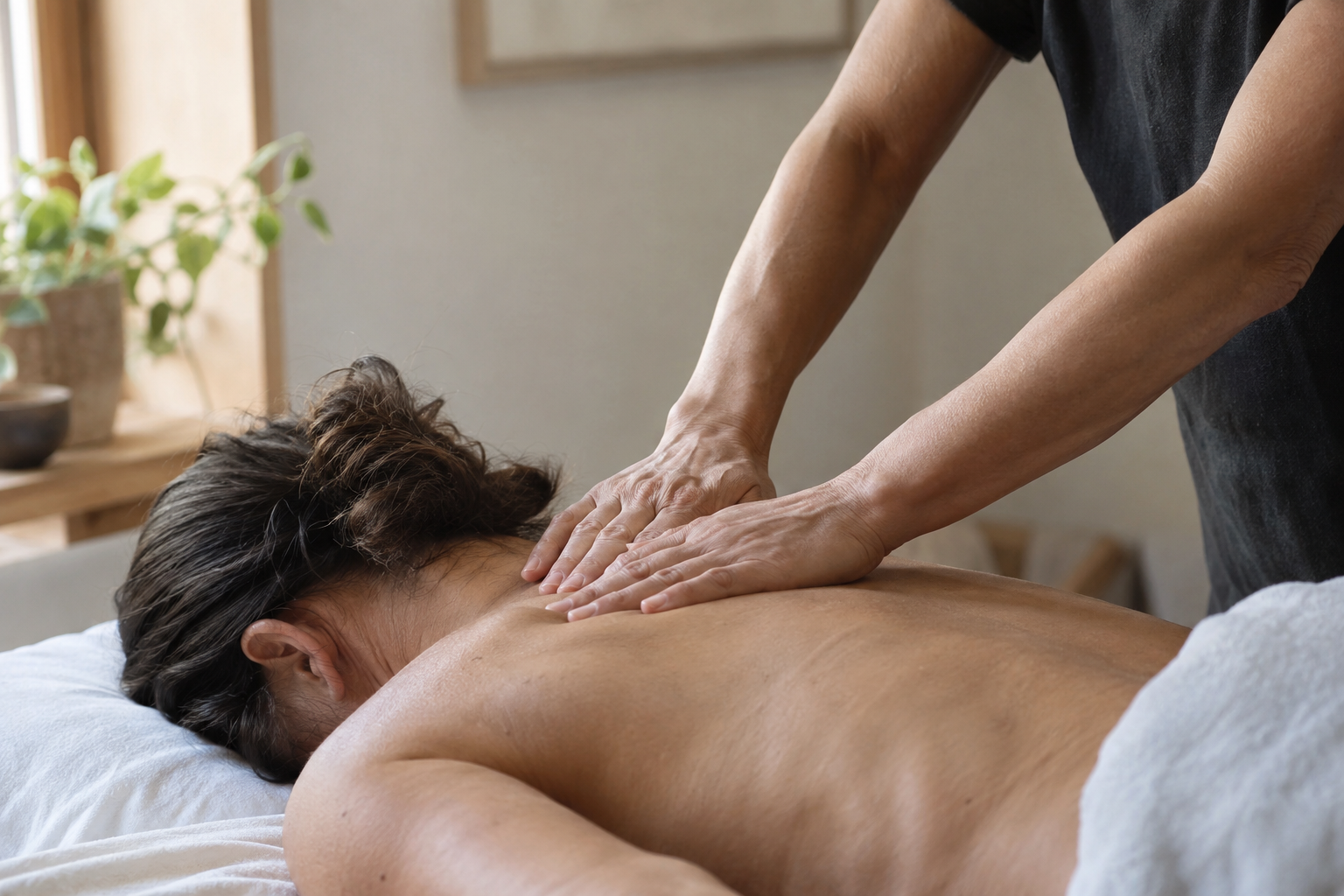
Massage belongs in this discussion too. Someone in pain gets an hour of complex, pleasant, constantly changing sensory input, generated by another person paying close attention to them. Their attention gets redirected around their own body. They’re in a different environment. They might feel cared for. They might stop bracing. They might get absorbed in the sensation itself. Expectations shift. Mood shifts. They may move differently afterward. The painful area may simply feel different.
And the pain may drop.
That drop is real evidence that something about the person’s pain changed. It is not, on its own, evidence that a muscle got longer, fascia got “released,” or a structural defect got fixed. Those are separate claims, and conflating them is easy: someone came in wanting something fixed, so we assume we must have fixed something.
Does calling it pleasurable make it less serious?
There’s probably a reason the massage field has resisted describing itself as primarily sensory and relational: “it feels good” sounds like it isn’t enough.
A therapeutic profession is supposed to do more than that. If massage changes fascia, corrects posture, or restores muscles to their “proper” length, it starts to sound like medicine — specialized knowledge finding a problem and fixing it.
But we may have talked ourselves into a strange hierarchy, where an experience only counts as legitimate once we can describe it as repairing something.
Music doesn’t need to fix your hearing to matter. A great meal doesn’t need to rehabilitate your tongue. Friendship doesn’t need to correct a tissue dysfunction. Sex doesn’t become trivial just because pleasure is part of its value. Walking into the ocean on a beautiful day doesn’t need to fix anything at all.
Experience shapes mood, attention, perception, behavior, relationships, and quality of life without repairing a single defective structure. Pleasure is part of well-being in its own right — so is comfort, curiosity, novelty, connection, rest, and the strange enjoyment of inhabiting your own body in an unfamiliar way.
Massage doesn’t get smaller once we stop insisting it fixes things. If anything, it gets more interesting.
Closer to music than medicine
None of this denies massage has therapeutic value. It just means we might need a better definition of “therapeutic.”
A skilled massage therapist gets very good at producing sensory experience. They learn how pressure, direction, speed, rhythm, and sequence change perception — and that the same technique lands completely differently on different people, and that one sensation reshapes how the next one is felt.
But the skill is relational as much as sensory. A good therapist learns to touch a person, not just apply force to a body. They notice a response and adjust. They communicate through pressure and pace and stillness, and the client’s response changes what happens next.
A musician doesn’t need to repair anyone’s auditory system to be excellent at their craft. A chef doesn’t treat the sense of taste in order to become a master of it. Massage deserves the same respect as any sophisticated sensory art — but it’s also something stranger, because its medium is another person’s body, and its raw material is largely one person’s behavior toward another. The experience isn’t simply delivered by the practitioner; practitioner and client build it together.
What did the client actually experience?
Change the framework, and the questions change too.
Therapists have traditionally been trained to ask what tissue they’re working on, what structure they’re trying to change, what restriction they feel under their hands. It’s worth asking, with equal seriousness, about the experience happening in front of them instead. What does this touch actually feel like? Where does the client’s attention go? How does one sensation change how the next one lands? What happens when movement turns to stillness, or broad contact narrows to something specific? How does knowing another person is producing the sensation change what it means?
These aren’t lesser questions. They are questions massage therapists are unusually well positioned to explore through practice.
A therapist spends thousands of hours generating variations in touch and getting immediate feedback on them. Few jobs offer that kind of sustained, hands-on exposure to how touch is experienced. That gives massage therapists an unusual opportunity to become careful observers of how sensory experience changes from person to person and from moment to moment.
Instead, curiosity has often gone the other way — toward imagined events happening under the skin. We got so focused on what we believed our hands were doing to fascia and muscle that we paid too little attention to what our touch was actually doing in someone’s perception, and to what was happening between the two of us.
Massage doesn’t have to fix something to matter
None of this asks anyone to choose between massage as pleasure and massage for pain. Someone can come in with a sore neck and leave with less pain. Someone else can come in because an hour of skilled touch feels wonderful. Someone might simply want the experience of being attended to. Someone else might just want the rare luxury of doing nothing while another person builds a long sequence of sensation across their body.
Often it’s the same person wanting all of it at once.
The real distinction is between the outcome someone wants and the story we tell ourselves about how it happened. Wanting pain relief doesn’t require believing the body is mechanically broken. Getting pain relief doesn’t prove tissue was repaired. And enjoying a massage doesn’t make it any less valuable.
The profession has spent a long time asking: what are we doing to this person’s tissue? There’s another question sitting right there, unasked: what kind of experience are we creating for this person?
Start there, and massage looks different. Less like fixing a machine, more like one of the many things people invented because sensory, emotional, and relational experiences are worth having on their own terms.
And in massage, maybe more than almost anywhere else, the experience isn’t something that happens to you. It’s something two people make together.
Author
Dr. Mark Olson holds an M.A. in Education and a Ph.D. in Neuroscience from the University of Illinois, specializing in Cognitive and Behavioral Neuropsychology and Neuroanatomy. His research focused on memory, attention, eye movements, and aesthetic preferences. Dr. Olson is also a NARM® practitioner, aquatic therapist, and published author on chronic pain and trauma-informed care. He offers a variety of courses at Dr-Olson.com that provide neuroscientific insights into the human experience and relational skill training for professionals and curious laypersons.